
Description
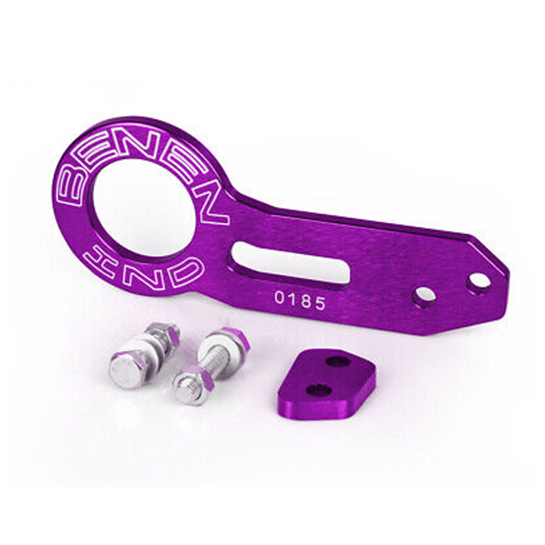
Tow Hook.
Applications:
- Towing: Tow hooks are primarily used for towing vehicles that are stuck, disabled, or need to be transported.
- Off-road recovery: Crucial for off-road vehicles as they can be used to recover vehicles that are stuck in mud, sand, or other challenging terrains.
- Vehicle transport: Necessary for securely attaching a vehicle to a trailer or flatbed for transportation purposes.
- Emergency situations: Can be used by emergency responders to quickly move or tow vehicles involved in accidents or blocking traffic.
- Recreational towing: Utilized for towing recreational vehicles like boats, jet skis, or trailers.
- Construction and industrial applications: Useful for moving heavy equipment or machinery in construction sites or industrial settings.
- Farming and agriculture: Employed in agricultural activities for towing or moving farm equipment or trailers.
- Motor sports: Commonly used in motorsports for recovery purposes or to attach safety equipment during track events.
- Military applications: Utilized in military vehicles for towing or recovery operations in various combat or training scenarios.
- Law enforcement: Tow hooks can be used by law enforcement agencies for towing or moving vehicles involved in criminal activities or blocking roads.
- Parking enforcement: Tow hooks are employed by parking enforcement teams for removing vehicles parked illegally or blocking access.
- Vehicle testing: Tow hooks are sometimes used during vehicle testing procedures to simulate towing or recovery situations.
- Car rentals: Installed in rental vehicles to allow for towing or recovery in case of breakdowns or accidents.
- Personal use: Used by individuals for various personal applications, such as moving trailers, helping friends with vehicle issues, or participating in outdoor activities.
Features:
- Sturdy construction: Made of durable materials like steel or high-strength alloys to withstand heavy loads and stress.
- Load capacity: Designed to support specific weight limits, ensuring they can safely handle the weight of the towed vehicle or equipment.
- Corrosion resistance: Often coated with materials like chrome, zinc, or powder coating to prevent rust and corrosion, ensuring their longevity.
- Easy installation: Typically designed for easy installation, either by bolting or welding them onto the vehicle’s frame or bumper.
- Universal fitment: Some tow hooks are designed with adjustable or universal mounting brackets, allowing them to be installed on a wide range of vehicle models.
- Front and rear mounting: Available for both front and rear mounting, providing flexibility in towing or recovery operations.
- Removable or foldable design: Some tow hooks feature a removable or foldable design to minimize their protrusion when not in use, reducing the risk of accidents or damage.
- Safety latch or locking mechanism: May include safety latches or locking mechanisms to secure the attachment point and prevent accidental disconnection during towing.
- Paint-friendly: May feature protective rubber or nylon inserts to prevent scratching or damaging the vehicle’s paint or finish.
- Visibility: Often come in bright colors or with reflective elements to enhance visibility, especially during low-light or emergency situations.
- Compatibility with tow straps or chains: Tow hooks are designed to accommodate various types of tow straps or chains, ensuring secure connections during towing operations.
- Impact resistance: Engineered to withstand impact forces and sudden jerks during towing or recovery, minimizing the risk of damage or failure.
- OEM or aftermarket options: Available both as original equipment manufacturer (OEM) accessories and aftermarket additions, providing a range of choices for vehicle owners.
- Compliance with safety standards: Tow hooks may meet specific safety standards or regulations set by organizations like the Society of Automotive Engineers (SAE), ensuring their reliability and performance.




Reviews
There are no reviews yet.